How Do Porta Potties Work?
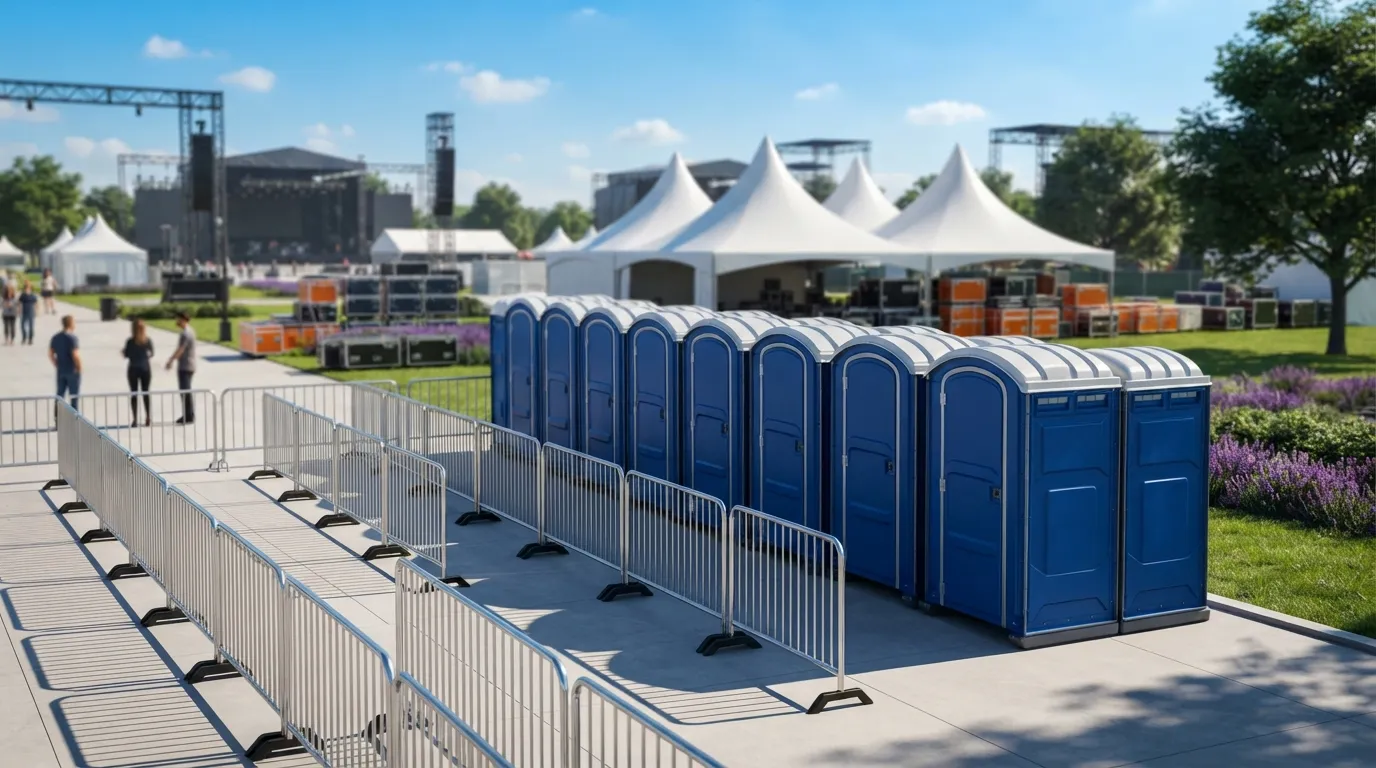
The basic unit is a plastic shell about 44 by 48 inches on the ground and roughly 92 inches tall, sized to fit tight jobsite corners or a backyard corner in Passaic. Inside, waste drops into the sealed tank below the seat. A blue or green chemical, the same kind of portable toilet chemicals near me that a route driver stocks on the truck, neutralizes odor and starts breaking down solids so the tank does not back up between services. There is no water line and no septic connection. That is what makes a standard porta potty rental different from a bathroom at home: it is a closed loop, not plumbing. A vent stack pulls air up and out instead of back into the stall. Hand sanitizer is usually mounted by the door, though it does not substitute for handwashing under 29 CFR 1910.141(d)(2), which is why job sites often pair units with a handwashing station rental. When a construction worker running to a porta potty needs it fastest, placement near the work zone matters as much as the chemical inside. We cover that in the porta potty placement guide and the how many porta potties do I need breakdown.
How Do Flushable Porta Potties Work?
A flushable or deluxe unit adds a small onboard freshwater tank and a foot pump or hand-crank flush that pushes a rinse of water into the holding tank after each use, instead of relying on chemical only. The deluxe flushable porta potty still uses the same sealed holding tank underneath, just with a flush cycle layered on top, which is why it costs more to rent and to service. Restroom trailers take this further: a restroom trailer rental runs on a small water pump and holding tank system similar to an RV, with real sinks and sometimes a shower, which is why a shower trailer rental makes sense for multi-day crews or events. ADA units follow the same tank and chemical setup as a standard unit but with a wider footprint. Under ADA Standards section 304.3.1 an accessible unit needs a 60 inch turning circle inside, and ADA Standards section 404.2.3 sets minimum door width at 32 inches, so an ADA accessible porta potty is bigger, not just labeled differently. Under ADA Standards section 213.2, at least 5 percent of clustered units at any Passaic event site need to be accessible units, never fewer than one.
How Does a Portable Sink Work?
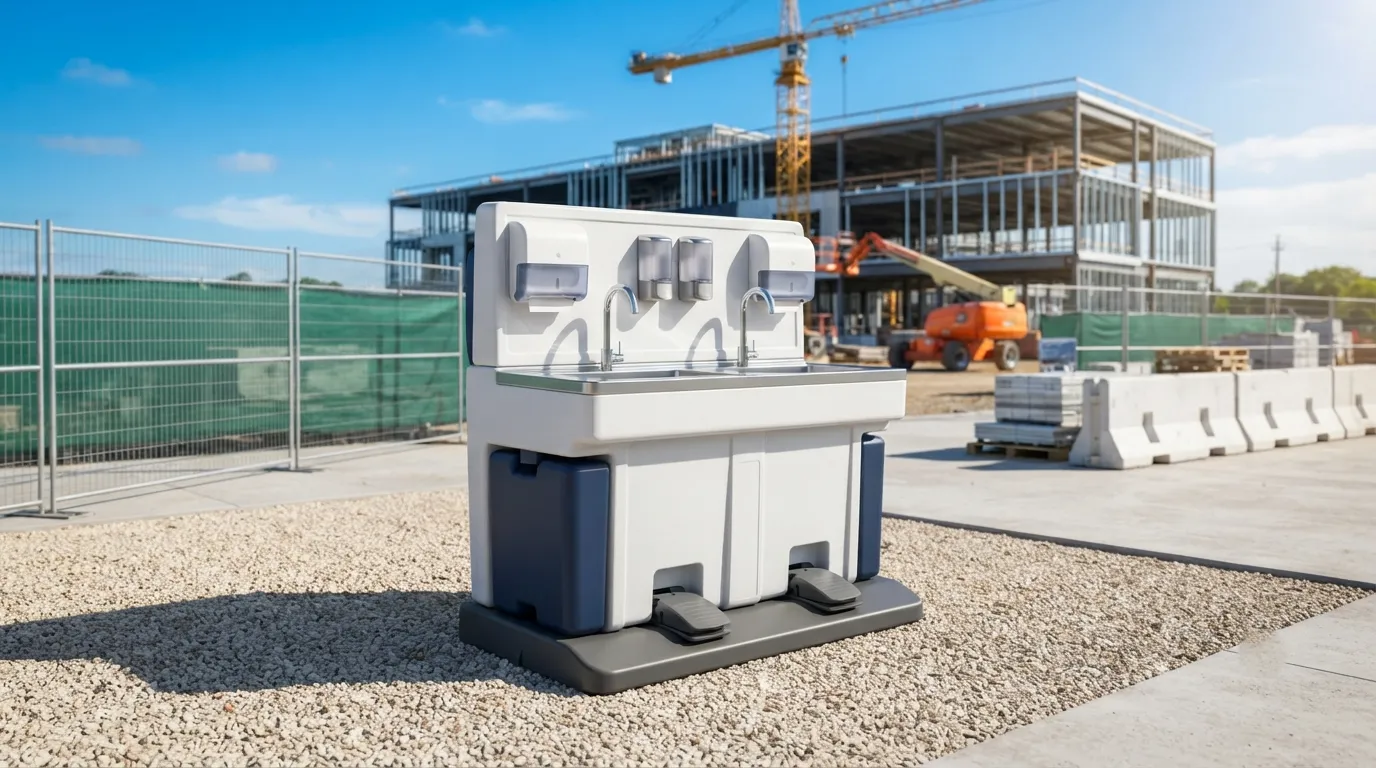
A portable sink is its own sealed system too: a freshwater tank feeds a pump, usually foot-operated, that pushes water through a faucet into a basin, which drains into a separate gray water tank underneath. Nothing hooks to a building. A portable sink rental needs soap and towels to satisfy 29 CFR 1910.141(d)(2), since hand sanitizer alone does not meet that standard, and a hand sanitizer station rental is a supplement, not a replacement. Construction crews in Passaic pair sinks with toilet units to cover both OSHA 1926.51(c) toilet ratios and general washing needs. Farms hand-labor operations fall under a different rule: OSHA 1928.110 requires potable water, toilets and handwashing within a quarter mile walk, at one facility per 20 workers, which is worth knowing if you run a farm and agricultural restrooms site. Painting, coating, herbicide or pesticide crews trigger OSHA 1926.51(f)(1) specifically, which requires washing facilities where those contaminants are present. See the full breakdown on OSHA portable toilet requirements.
How Do Camping Porta Potties Work?
Camping units work on the same chemical-and-tank principle, just smaller and often self-contained in one carryable box with no delivery needed. A drop-in cassette holds waste and chemical, then empties into a dump station. For a Passaic backyard campout or a weekend at a rural site, a rented camping porta potty from Passaic Porta Pros is a standard unit delivered and picked up around the trip, priced by the weekend rather than kept long-term. Service interval matters here too. ANSI/PSAI Z4.3 sets a baseline of one service visit per week for up to 10 users across a 40 hour week, which is why weekend camping rentals rarely need a mid-trip pump-out, but a multi-week event or a busy jobsite does. If odor or a slow fill has you wondering whether a septic tank cleaning chemical is doing its job, the honest answer is that chemical controls smell and breakdown, not capacity. A full tank still needs pumping. That is a service call, covered under septic pumping service or, for standing tanks, septic tank cleaning.
Pricing at a Glance
| unit | day | week | month |
|---|---|---|---|
| standard | 100-350 | 130-500 | 125-325 |
| deluxe | 85-1200 | 150-290 | - |
| ada | 200-400 | 120-240 | - |
Passaic sits 2.5 miles southwest of Garfield and 3.1 miles southwest of Lodi, both inside our regular delivery loop, and we also run routes into Nutley, 3.6 miles away. Check exact numbers for your job on the porta potty rental cost and porta potty rental per day pages, or the monthly porta potty rental page for longer jobs.
Do porta potties smell?
Not when serviced on schedule. Chemical controls odor between visits, and the ANSI/PSAI Z4.3 baseline of one weekly service for moderate use keeps tanks from filling past capacity. See do porta potties smell for what affects it.
How often are porta potties cleaned?
Weekly is standard for most Passaic rentals, per the ANSI/PSAI Z4.3 baseline. Busy events or crews over ten daily users need more frequent visits. Full detail on how often are porta potties cleaned.
Can I put a porta potty on the street in Passaic?
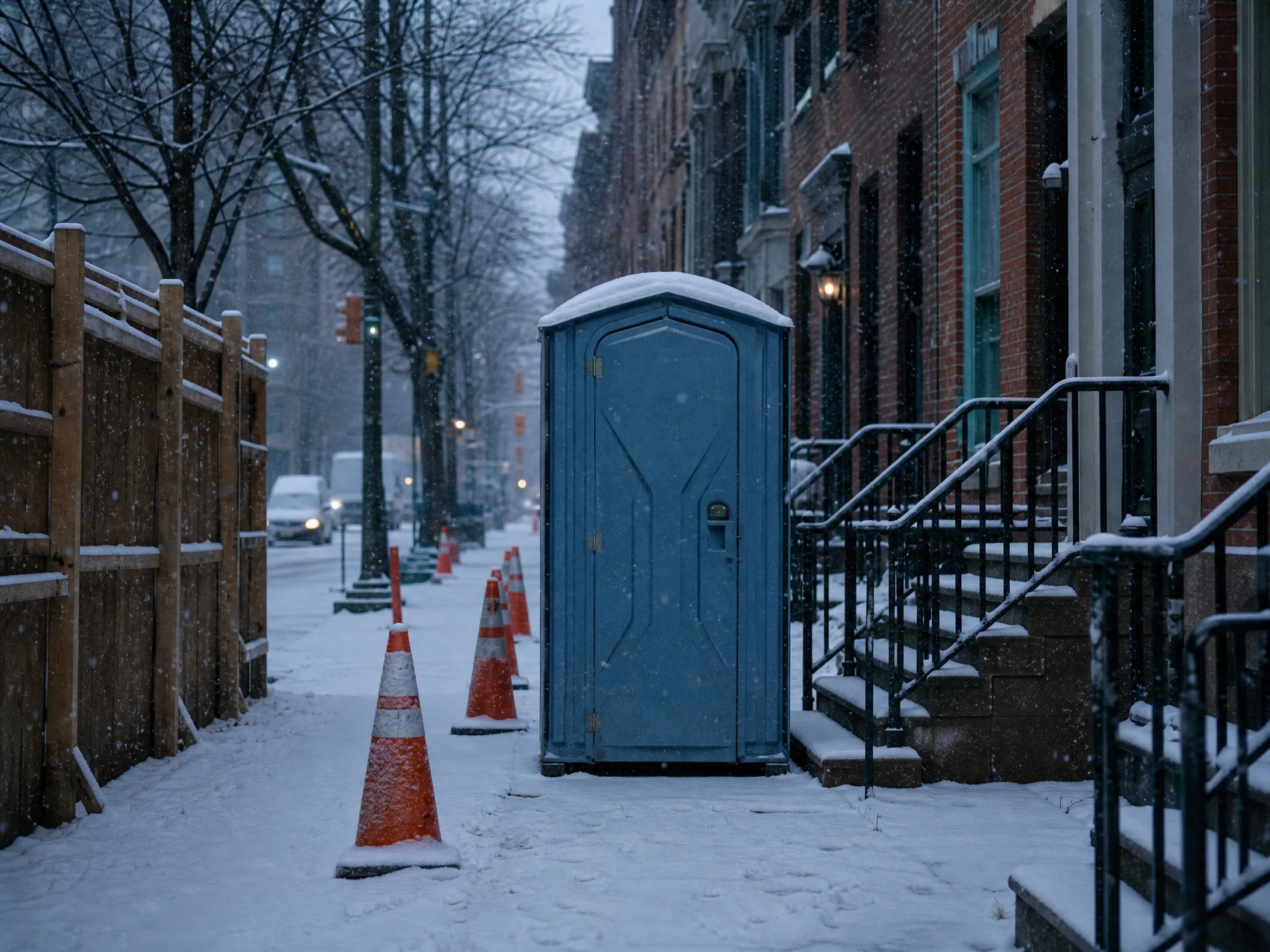
Placement in the public right of way needs confirming with the city before delivery. We can help you check before we schedule. See porta potty permit requirements for what to ask about.
How many porta potties does my crew need?
OSHA 1926.51(c) sets one toilet for 20 workers or fewer on a construction site, scaling up from there. Use our how many porta potties do I need guide to size it exactly.
What is the difference between a porta potty and a restroom trailer?
A porta potty is a sealed single unit with a chemical tank. A restroom trailer runs plumbed sinks and flush toilets off an onboard water system. Compare options on portable restroom rental.
Next step
Get a delivery date
Tell us the address, the dates and the headcount. We size the order and confirm the route.