
What do OSHA rules require for farm sanitation?
Field sanitation is its own OSHA category, separate from construction. OSHA 1928.110 covers hand-labor agricultural operations and sets the bar at one toilet facility per 20 employees, with potable water and handwashing within a quarter mile of wherever the crew is working. That is tighter than the construction standard under OSHA portable toilet requirements, which allows one unit per 20 workers on a jobsite without the quarter mile distance rule. If your operation mixes field labor with packing sheds or loading docks, you may be working under both standards at once, and it is worth reading through how many porta potties do I need before you commit to a count.
Potable water is a separate requirement, covered under OSHA 1926.51(a)(1), and it has to be available alongside the toilets, not just somewhere on the property. We pair standard porta potty rental units with handwashing station rental service so both boxes get checked on the same delivery. For crews spraying pesticides or herbicides, washing facilities fall under OSHA 1926.51(f)(1), which specifically covers operations involving herbicides, insecticides, paints or coatings. That is a different trigger than general field sanitation, and it means a handwash station near the mixing and loading area matters as much as one near the picking rows. See handwashing station requirements for the fuller breakdown.
Where should units go on a working farm?
Placement on farmland is different from placement on a paved jobsite. Ground has to be level enough that a 44 by 48 inch unit sits stable, and access roads need to hold a service truck in wet weather. We plan routes the same way we do for roll-off dumpster rental drop-offs, checking for firm ground and turnaround room before the truck ever leaves the yard. If units are moving with the crew across multiple fields, spacing them within that quarter mile walk from 1928.110 keeps you compliant without renting more units than you need.
Farms near Passaic often run operations that stretch toward Nutley, 3.6 miles southwest, or up toward Garfield, 2.5 miles northeast, and seasonal labor crews may split time across more than one parcel. We coordinate multi-site delivery so units land where the crew actually is that week, not where they were during planting. For longer growing seasons, monthly porta potty rental pricing works out better than repeated weekly orders, and we can rotate service days around harvest schedules rather than a fixed calendar. Grain storage, equipment yards and packing operations sometimes need storage container rental alongside restrooms, and we quote both together when a site needs the full setup.
How often are farm porta potties serviced?
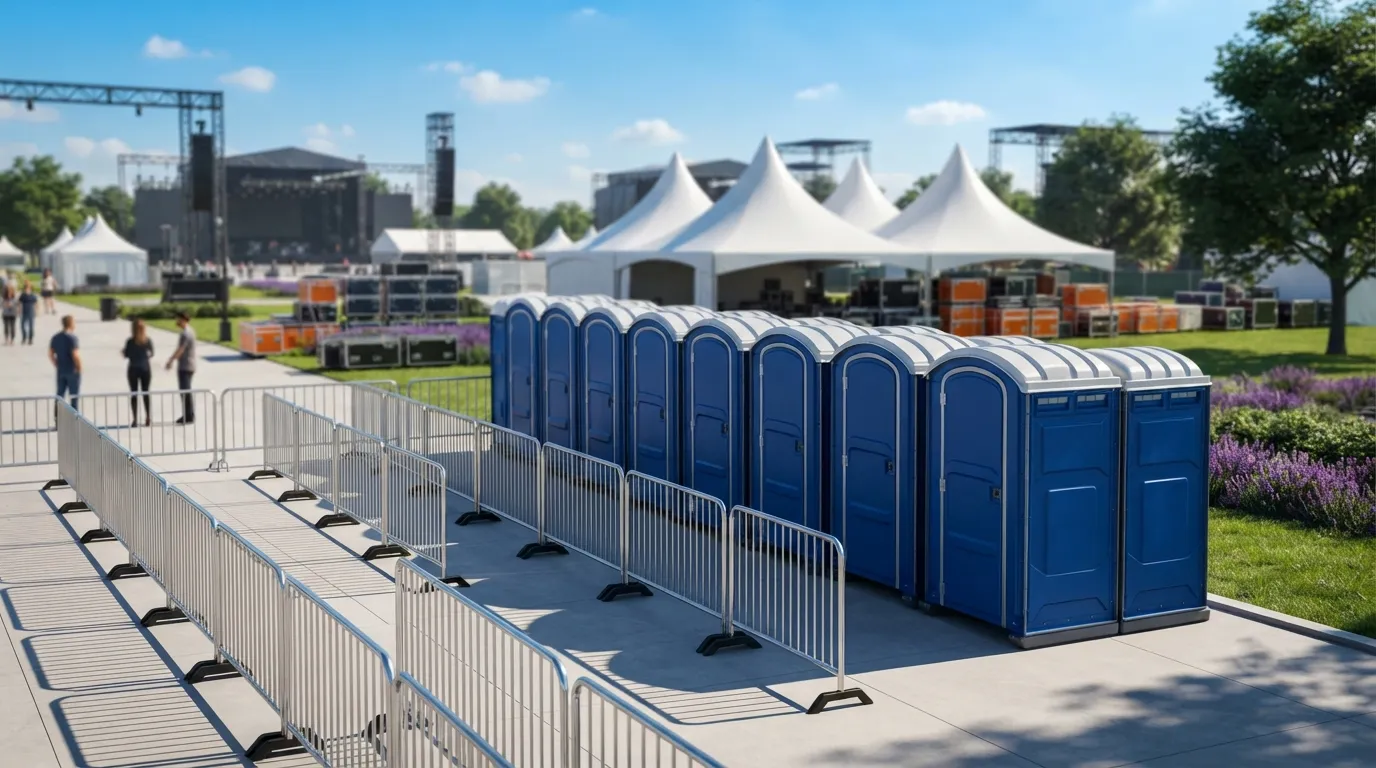
The baseline service interval under ANSI/PSAI Z4.3 is one visit per week for up to 10 users across a 40 hour week, and farm crews working longer days or larger headcounts need more frequent stops. A 60 to 70 gallon holding tank on a standard unit covers a crew for that baseline week under normal use, but hand-labor crews working ten and twelve hour days during harvest will fill a tank faster than an office crew on a five day schedule. We adjust the pump-out schedule up during peak season and back down in slower months, which is covered in more depth on how often are porta potties cleaned.
Handwashing units need soap and towels or a hand drying device to meet 29 CFR 1910.141(d)(2); hand sanitizer alone does not satisfy that standard, which matters if your operation is inspected. We stock both on every portable sink rental unit we deliver, and restock on the same visit as the toilet service so you are not running two separate schedules. Pricing for standard units runs by the week or the month depending on how long the season runs; see porta potty rental cost for the full breakdown, or porta potty rental per day if you only need coverage for a short window like a single harvest push.
| unit | duration | typical price |
|---|---|---|
| standard | week | $200 |
| standard | month | $200 |
| delivery_fee | week | $100 |
Passaic farm operations that also need debris removal during harvest or equipment turnover can pair restroom service with construction dumpster rental or check dumpster sizes and dimensions to match a container to the job. For crews needing a break room or supply staging area, a mobile office trailer rental rounds out the site setup without adding a second vendor.
Do farms need ADA accessible units?
It depends on your workforce and any public-facing operations like a farm stand or agritourism event. If units are clustered, ADA Standards 213.2 requires at least 5 percent to be accessible, never fewer than one. See ADA accessible porta potty for specs.
How far in advance should we order for harvest season?
Order as early as you can once the harvest date firms up. Seasonal demand across Passaic and nearby farm operations peaks fast, and emergency porta potty rental exists for gaps, but planned delivery avoids that scramble entirely.
Can we split service between two field locations?
Yes. We route multi-stop service for farms spanning more than one parcel, including operations stretching toward Lodi, 3.1 miles northeast of Passaic. Tell us both addresses when you request a quote.
What size tank do handwashing stations carry?
Specs vary by model; ask when you request a quote. Stations pair with any portable restroom rental order and restock soap and towels on the same visit under 29 CFR 1910.141(d)(2).
Does a septic tank on the farmhouse need separate service?
Likely yes. A residential septic tank is typically pumped every 3 to 5 years depending on tank size and household use. See septic pumping service for scheduling.
Next step
Get a delivery date
Tell us the address, the dates and the headcount. We size the order and confirm the route.